 English
 العربية
 中文語言
中文語言
 हिंदी भाषा
 हespañol
 русский
 Português
 Le français
 Deutsch
 ภาษาไทย
 Português
 日本語
日本語

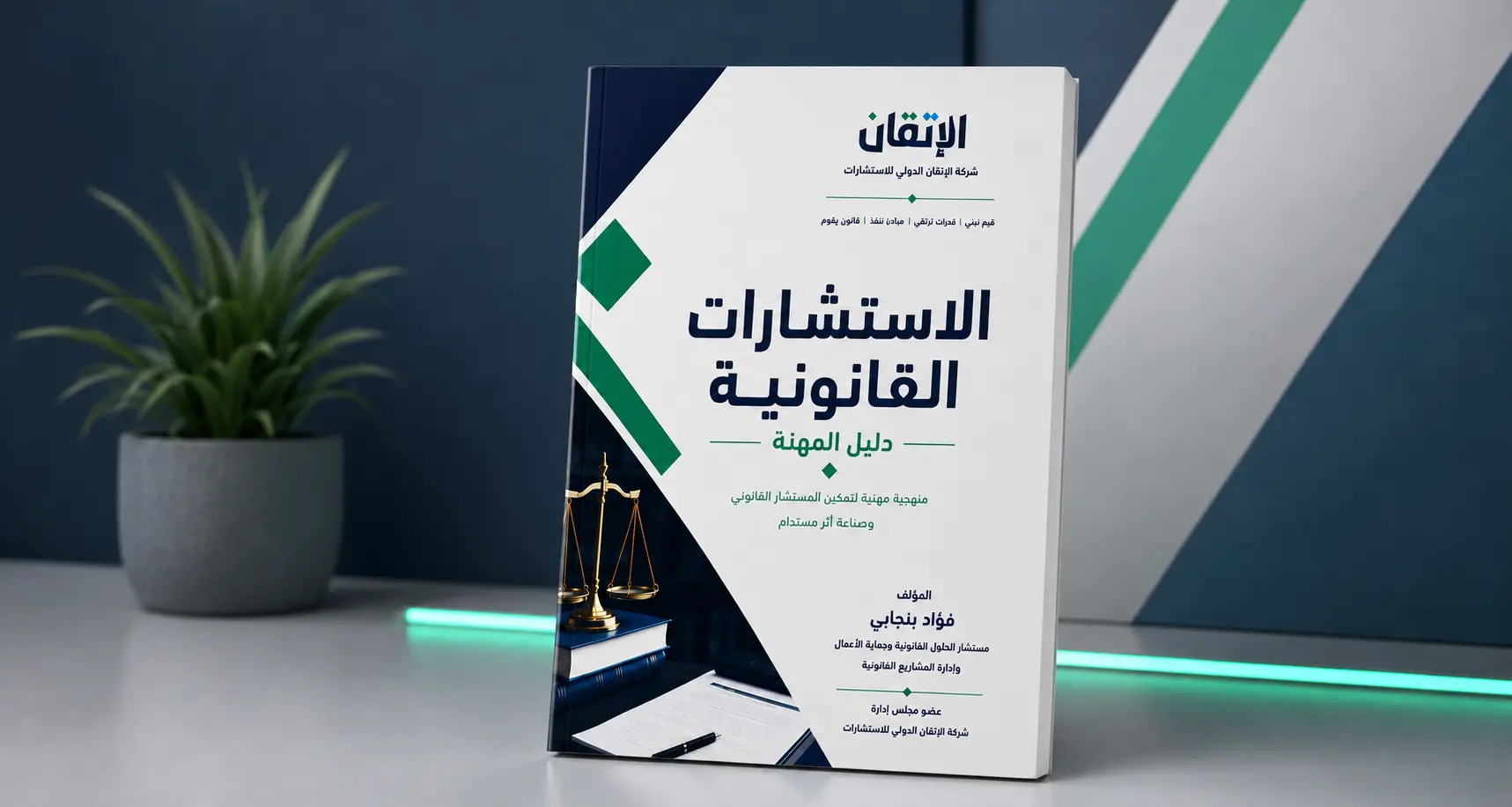


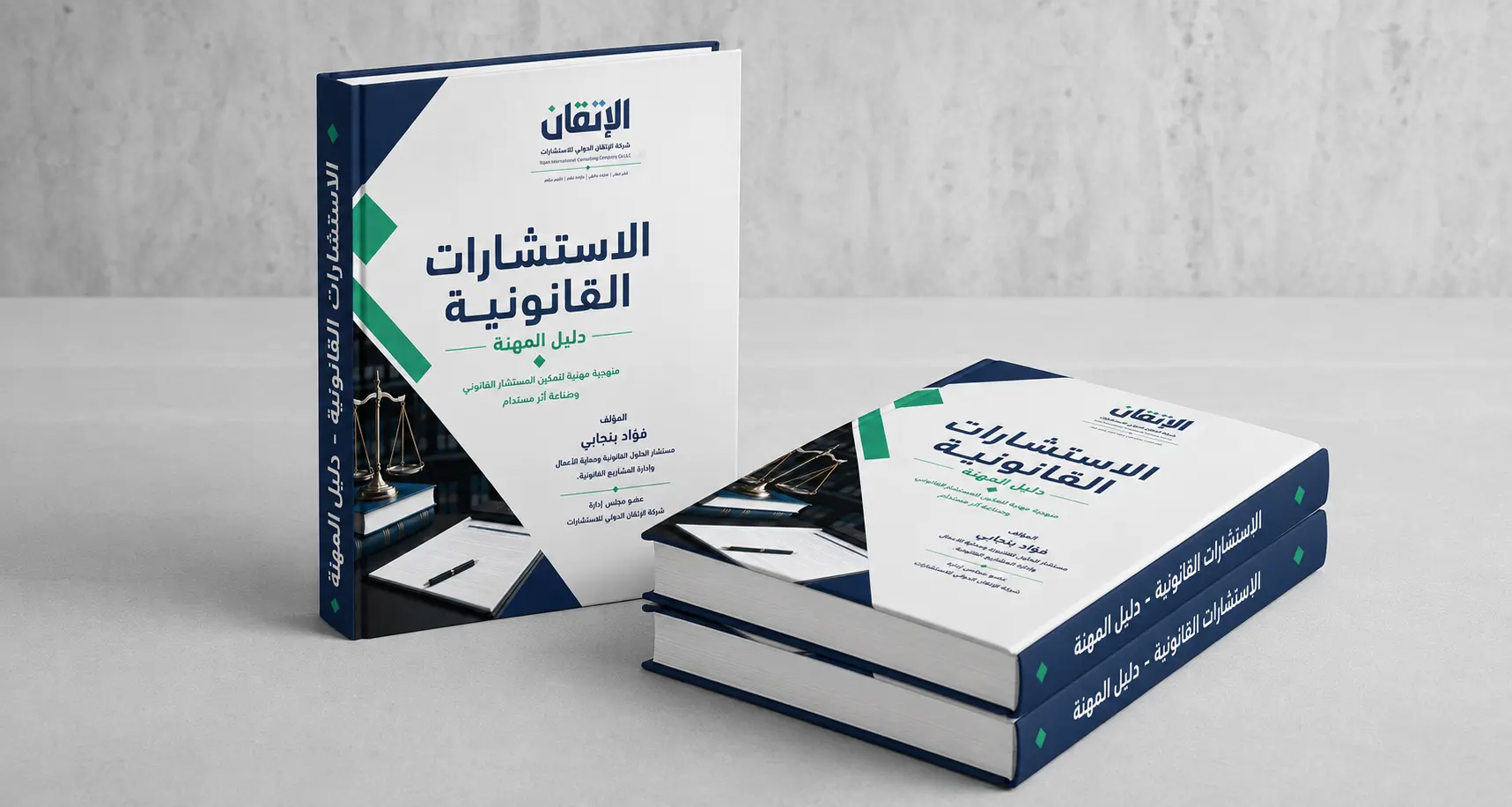
A practical professional guide that structures consulting practice from understanding the service requester and accepting the engagement, through building the facts, research, analysis, and drafting the opinion and recommendation, to implementation, impact measurement, and management of legal service quality.
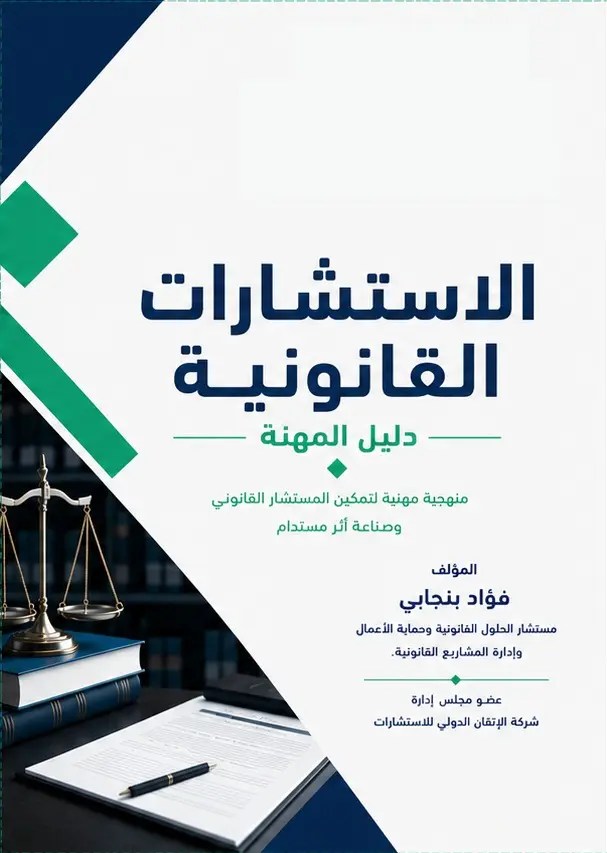
Legal ConsultingA Guide to the Profession
A professional methodology to empower the legal consultant and create sustainable impact
Legal consulting is an integrated practice, not a standalone answer
A consultation begins with understanding the service requester before referring to the legal text. It extends from verifying facts and documents to framing the question, assessing risks, developing the opinion or recommendation, and presenting it in a way that helps the client make an actionable decision.
The guide organizes the elements of practice within a flexible professional framework adapted to the nature of the client, the size and complexity of the engagement, the sector, and the applicable law. It combines foundations with application, legal thinking with professional management, and sound analysis with an understanding of the client’s practical reality.
Its purpose is to move practice away from improvisation and fragmented experience toward steps, concepts, and tools that can be learned, applied, reviewed, and improved, while keeping the consultant’s professional judgment central to every engagement.
Three gaps that weaken the value of consulting despite sound legal knowledge
The guide addresses the gap between knowing the legal rule and managing the consulting service that produces a clear opinion, an appropriate recommendation, and an actionable decision.
Managing Entry into the Engagement
Receiving the request, distinguishing information from a consulting relationship, verifying competence and conflicts of interest, and defining the scope of work before analysis begins.
Building Facts Productively
Identifying the parties, relationships, interests, time periods, and material documents, and moving from the client’s narrative to a neutral legal picture that can be analyzed.
Turning an Opinion into a Decision
Organizing alternatives, risks, requirements, impacts, costs, and probabilities, and presenting them in language that supports the decision-maker at the right time.
Three dimensions without whose integration professional consulting is incomplete
The guide views a consultation as a professional engagement with inputs, processes, and outputs, governed by a professional, ethical, and contractual relationship.
Sound Legal Analysis
Understanding the facts, identifying the issues, verifying the law in force, and referring to the appropriate statutory, judicial, and professional sources.
Quality of Engagement Management
Defining scope, roles, and time; documenting stages; reviewing outputs; and managing change, risks, and documents.
Value of the Consultation to the Client
Linking the opinion to the client’s objectives, decisions, and ability to implement, and presenting alternatives in a clear, balanced, and usable form.
A professional path that prevents jumping to the answer before all its elements are complete
Select a stage to review its function and the expected output within the consulting engagement.
Receiving the Request and Understanding the Service Requester
Identify who is requesting the service, their capacity and authority, what they are actually presenting, and the initial information that reveals the nature, sensitivity, and jurisdiction of the engagement.
Acceptance Decision and Defining the Engagement Scope
Review competence, conflicts of interest, and the sensitivity of the engagement, then describe the service, its limits and outputs, the responsibilities of both parties, the duration, fees, and termination mechanism.
Building the Facts and Documents
Collect the client’s narrative, documents, records, correspondence, and digital evidence; sort the material facts; and identify the parties, relationships, time periods, and gaps.
Turning the Request into an Engagement Question
Move from the apparent problem to the true legal issue and formulate a specific question that guides research and analysis and defines the output the client needs.
Legal Research and Source Verification
Identify sources of the legal rule, verify that laws, regulations, and decisions are in force, examine relevant judicial principles and references, and document them in the research file.
Legal Analysis and Characterization
Connect the elements of the rule to the facts and evidence; analyze responsibilities, deadlines, procedures, strengths, weaknesses, and risks; and test assumptions and gaps.
Building the Legal Opinion
Organize the facts, issues, rules, analysis, alternatives, weighting, and recommendation, while stating assumptions, reservations, and limits on reliance and use.
Designing Alternatives and the Recommendation
Distinguish between stating the legal position and designing the solution, and assess preventive, corrective, negotiated, litigation, and contractual alternatives according to risk, cost, time, and feasibility.
Presenting the Consultation in Decision Language
Choose the appropriate format for the output, simplify risks and probabilities, prepare the executive summary, address the client’s questions, and document the conclusions reached in the presentation.
Implementation, Follow-up, and Impact Measurement
Convert the recommendation into a plan, responsibilities, templates, documents, and follow-up; monitor compliance and legal updates; then measure results, close the engagement, and preserve knowledge.
From Establishing the Profession to Applying, Managing, and Developing It
The guide’s sections work as interconnected loops in the engagement cycle, moving from the concept and professional relationship to the process, fields, management, and development.
Perspective on the Legal Consulting Profession
The nature and purpose of consulting, the legal services industry, the client, the professional relationship, the consultant’s role, legal thinking, ethics, and the impact of consulting on change.
The Legal Consulting Process
Engagement entry, diagnosis, scope, information gathering, research and analysis, opinion building, solution design, presentation, implementation, and follow-up.
Fields of Legal Consulting
Applying the methodology to companies, governance, contracts, business, employment, investment, compliance, privacy, intellectual property, disputes, transactions, real estate, and the nonprofit sector.
Managing a Legal Consulting Practice
Office management, strategy, marketing, pricing, engagement management, quality, knowledge, technology, operational and financial control, and human resources.
Developing the Legal Consultant and the Profession
Competencies, training and development, legal consulting writing, thought leadership, and readiness for the future of legal consulting.
Professional Appendices and Templates
Templates, checklists, policies, and matrices that help adapt the methodology and turn it into an institutional practice that can be documented and reviewed.
One methodology adapted to thirteen consulting fields
The guide does not provide an encyclopedic explanation of laws; rather, it shows how to manage a consultation and adapt its path to the nature of the field, client, decision, and risks.
Company Formation
Governance
Contracts and Contract Management
Business and Commercial Consulting
Employment and Labor Compliance
Foreign Investment
Legal Compliance
Data Protection and Privacy
Intellectual Property
Disputes and Conflict Resolution
Mergers and Acquisitions
Real Estate and Construction
Nonprofit Sector and Endowments
Eighteen appendices that turn concepts into documented practice
Templates, checklists, and policies are used in proportion to the value, complexity, and sensitivity of the engagement and are not presented as rigid templates for every case.
Starting the Relationship and Establishing the Engagement5 Appendices+
Research, Opinion, and Risk Analysis7 Appendices+
Firm Policies, Quality, and Development5 Appendices+
Academic and Professional ReferencesOne Appendix+
Sequential Reading and Selective Professional Reference
The guide was designed to serve structured learning and immediate practical needs, with the level of documentation and tools selected according to the size and risks of the engagement.
Sequential Reading
To move from establishing concepts and understanding the client and professional relationship to managing the engagement, output, implementation, quality, and professional development.
Selective Reference
To return to a chapter or tool when checking conflicts, defining scope, gathering facts, conducting research, or drafting the opinion and recommendation.
Attorney Fouad Punjabi
Legal Solutions, Business Protection and Legal Project Management Consultant — Board Member of Itqan International Consulting Company
The guide was built to connect legal knowledge with managerial and operational thinking and to organize the elements of consulting practice from receiving the request to measuring service impact, with a focus on institutional decisions and consulting related to business and organizations.
Its structure combines practical experience, legal and professional sources, project management principles, quality, and client understanding, adapting them within a framework that preserves the distinct nature and responsibility of the legal profession.
A knowledge publication that establishes a more disciplined and impactful consulting practice
The guide is part of Itqan International Consulting Company’s efforts to build professional knowledge, improve the quality of legal services and projects, and develop institutional work tools for lawyers, consultants, and legal departments.
This book is a special professional publication of Itqan International Consulting Company, authored by attorney and legal consultant Fouad Punjabi. It was prepared as a knowledge-based and practical reference to support the consulting team in its professional practice.
The book is not offered for sale or commercial circulation. Its distribution is limited to internal professional use, and a limited number of copies may also be presented as gifts to a select group of leaders, experts, organizations, and influential figures, in recognition of professional partnerships and as a contribution to disseminating knowledge and strengthening sound legal and consulting practices.

Add New Comment