 English
 العربية
 中文語言
中文語言
 हिंदी भाषा
 हespañol
 русский
 Português
 Le français
 Deutsch
 ภาษาไทย
 Português
 日本語
日本語

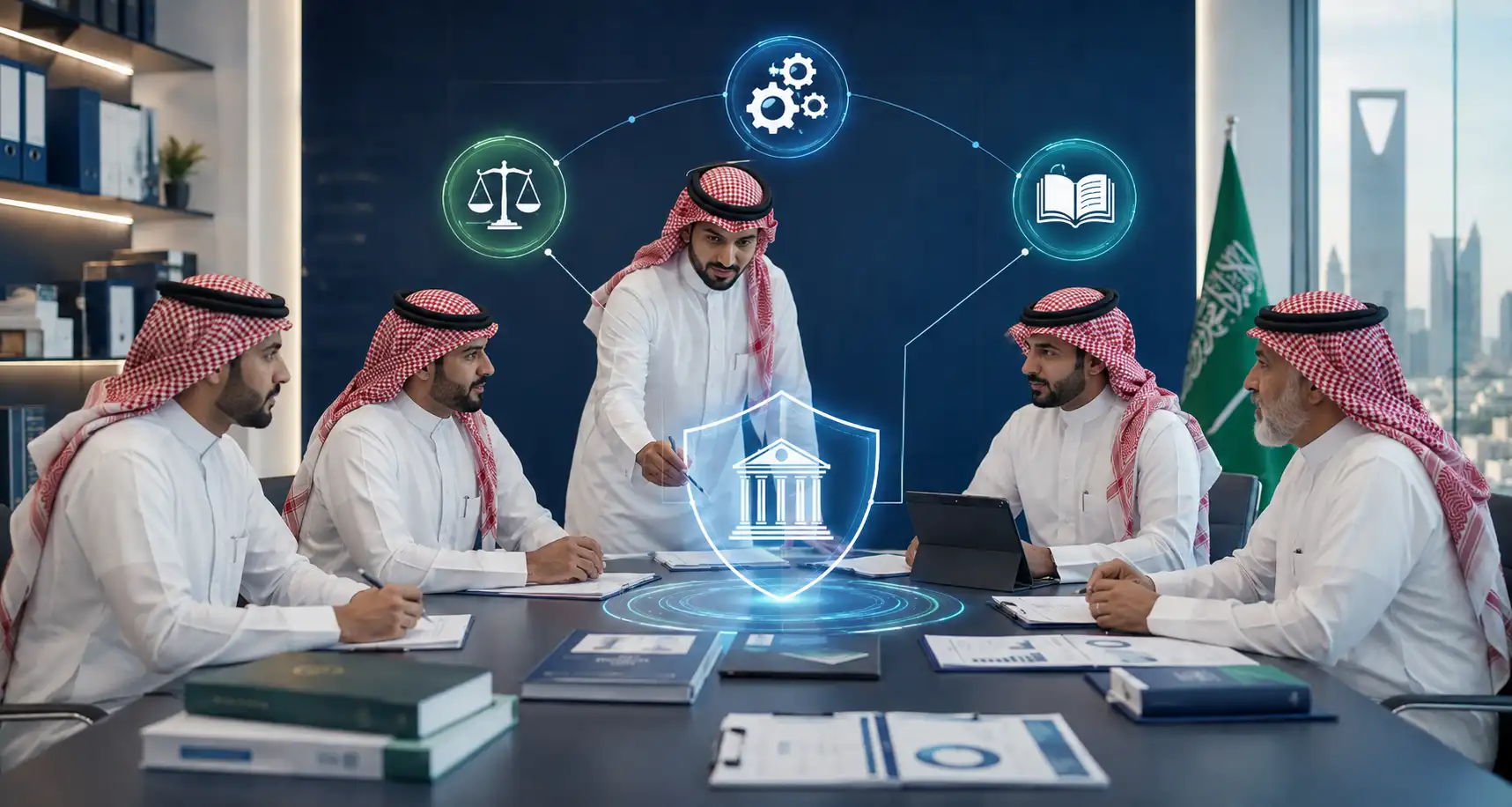
Institutional problems do not reach consulting firms neatly classified by discipline. A challenge that appears legal may stem from an unclear administrative procedure; an administrative problem may be linked to a lack of knowledge or training; and an educational decision may create regulatory and contractual consequences that require precise legal treatment. From this perspective, Al-Itqan International Consulting Company has strengthened the role of its legal department within its consulting ecosystem and connected it with administrative, educational, and pedagogical thinking to provide solutions from a broader perspective that goes beyond the traditional separation of disciplines.
This development builds on the company’s existing legal function, whose role has been expanded and more deeply integrated with the various areas of consulting work. The legal department now operates as a partner in understanding decisions, assessing their implications, developing procedures and policies, and regulating institutional relationships from their earliest stages. This supports management, protects operations, and improves the quality of decision-making.
This approach is based on a new consulting mindset that views law, administration, and education as interconnected elements within a professional organization. Law defines the regulatory framework, protects rights, and governs responsibilities. Administration translates that framework into implementable policies, procedures, and authorities. Educational and pedagogical thinking, in turn, helps transfer knowledge, build skills, and strengthen employees’ ability to understand, comply with, and apply regulations in the workplace. Through this integration, consulting moves beyond addressing isolated aspects of a problem toward building an institutional solution that can be sustained and developed.
The legal department participates in reviewing projects and decisions from their early stages and examines the related obligations, risks, authorities, contractual relationships, and regulatory considerations. This work is carried out in coordination with specialists in administration, institutional development, and education, helping to build solutions that take account of legal requirements, operational realities, stakeholder characteristics, and the organization’s ability to implement them. The soundness of legal advice depends on its ability to integrate into operations, just as the quality of an administrative procedure depends on the clarity of its legal basis and employees’ understanding of it.
This model enables complex institutional projects and matters to be addressed through a multidisciplinary team. When developing a policy or internal regulation, the legal department reviews its compliance with applicable regulations, contracts, and obligations. The administrative specialist defines roles, procedures, and approval pathways, while the educational function transforms the content into knowledge that can be understood and applied through manuals, programs, and awareness materials. The policy therefore becomes part of daily practice rather than merely a document kept on file.
This integration also extends to educational and training projects. The legal department can contribute to reviewing contracts, intellectual property rights, and obligations relating to content, trainers, and beneficiaries, while educational and administrative specialists design programs, manage operations, and measure outcomes. This provides a more balanced view of the project and reduces the gaps that may arise when each discipline addresses one aspect in isolation from the others.
The approach also strengthens the preventive role of legal consulting by shifting from waiting for a violation or dispute to participating in the development of decisions and procedures that reduce the likelihood of either occurring. The legal department becomes part of the planning and development process, assesses potential implications before decisions are approved, helps identify risks, proposes alternatives, and establishes controls that support administrative and educational objectives within a clear regulatory framework.
Through this development, Al-Itqan International Consulting Company affirms that the true value of consulting does not lie in the number of disciplines available within an organization, but in their ability to operate as one integrated system. The presence of legal, administrative, and educational expertise does not automatically create integration. Integration is achieved when analytical methods are aligned, teams exchange knowledge, and solutions are built on a shared understanding of the problem, the objective, and the organizational and operational context.
Strengthening the role of the legal department represents one step in the company’s direction toward building a more interconnected consulting model that combines legal protection, administrative efficiency, and knowledge development. It aims to help organizations make more mature decisions, establish clearer policies, and develop practices that can be implemented, measured, and improved, thereby enhancing performance quality, reducing risk, and supporting institutional sustainability.
With this mindset, Al-Itqan International Consulting Company works to integrate legal, administrative, and educational services within a single vision that begins with understanding the organization and concludes with a comprehensive solution that considers the regulatory framework, people, procedures, and outcomes. This reflects a more advanced stage in the development of consulting work and establishes a relationship in which the consultant serves as a partner in thinking, development, and the protection of decision-making.

Add New Comment