 English
 العربية
 中文語言
中文語言
 हिंदी भाषा
 हespañol
 русский
 Português
 Le français
 Deutsch
 ภาษาไทย
 Português
 日本語
日本語

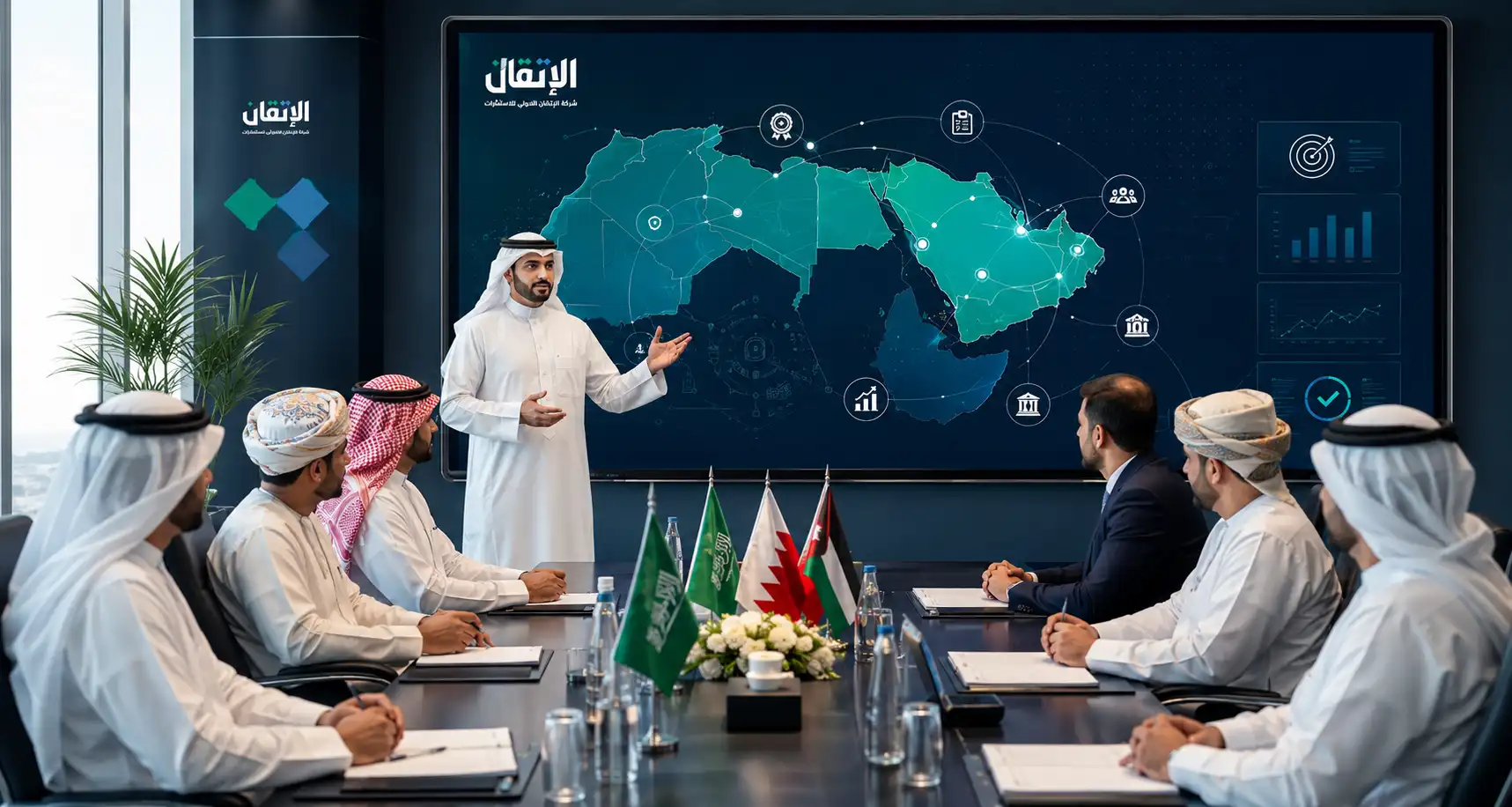
From Quality Management to a Civilization of Quality
Quality today is undergoing the most transformative stage since its emergence.
It has moved beyond the boundaries of industry and management to become a developmental system of thought and a civilizational culture that reshapes the relationship between people, work, and society.
Across the Arab world, awareness is growing that quality is not a temporary development project, but a means of survival and a pillar of sustainability for the future of development.
The question is no longer:
How do we implement quality?
It has become:
How do we create a model of quality rooted in our values, culture, and future aspirations?
This transformation requires Arab administrative thought to move from “managing quality” to “leading quality,” and from technical improvement to civilizational improvement that addresses the human being before the system.
Quality in the Age of Intelligence and Digital Transformation
The world is currently witnessing a new quality revolution known as Quality 5.0. This stage combines artificial intelligence with human intelligence to create a balance between technology and humanity.
The main characteristics of this stage include:
AI-Driven Improvement
Algorithms are used to conduct predictive performance analysis and identify deviations before they occur.
Human Experience Quality
Quality no longer refers only to customer satisfaction, but also to user well-being and the value of the overall experience.
Data and Knowledge Quality
Data has become the “new raw material” of quality, with standards relating to integrity, accuracy, and reliability.
Comprehensive Sustainability
Sustainability and ESG
Quality is now measured by the extent to which an organization protects both people and the environment.
Quality is therefore evolving into an intelligent and continuous perceptual system that learns autonomously and improves itself without direct human intervention.
An Awareness Gap, Not a Resource Gap
The Arab world possesses significant material and human capabilities, but it faces a gap in institutional improvement awareness more than a shortage of resources.
Some organizations still view quality as an “ISO certificate” or a “documentation procedure,” while the world is moving toward quality as organizational intelligence.
To overcome this gap, quality must be transferred:
From departments to minds.
From documents to culture.
From projects to systems of thought.
This is the essence of continuous improvement in the twenty-first century: uninterrupted institutional learning led by human awareness and supported by technology.
Key Dimensions of the Future Transformation of Quality in the Arab World
From Control to Empowerment
Traditional systems depend on “top-down control,” whereas the future of quality is based on “empowerment from within.”
The role of leaders must shift from “controller” to “guide and inspirer,” cultivating a culture of initiative and self-improvement.
From Metrics to Value
Future quality will not be based on the number of certificates or reports, but on the value added to society and the economy.
Every quality initiative should answer one fundamental question:
What value have we created?
From Procedures to Creativity
Genuine improvement does not arise from merely applying rules, but from liberating institutional thinking.
The future belongs to organizations that make creativity an integral part of their administrative systems.
From Operational Quality to Institutional Quality of Life
Future quality will not be limited to services and products. It will also encompass the work environment, mental well-being, justice, and fairness.
Every organization committed to excellence is, at its core, a humane organization.
From Importation to Localization
The time has come to build a distinctive Arab quality model that combines civilizational values with scientific management.
Excellence is not new to our culture; it is deeply rooted in our Qur’anic and administrative identity.
Features of the “Arab Itqan Model for the Future”
Based on the accumulated experiences of the Gulf and Arab worlds, together with developments in global thought, a forward-looking model for the future of quality can be formulated under the title:
“The Arab Itqan Model for Sustainable Quality”
The model is built on five intellectual foundations:
1. Purpose-Driven Leadership
Future leadership is directed not only toward targets, but toward purposes that create social value.
2. Knowledge-Based Quality
Educational and training systems should be built on organized knowledge and data-driven analysis.
3. Smart Continuous Improvement
Artificial intelligence and predictive analytics should be used to enhance performance and eliminate waste in time and resources.
4. Human Sustainability
People should remain at the center of quality through professional growth, mental well-being, and work-life balance.
5. Value-Driven Excellence
Arab and Islamic values should guide institutional behavior toward integrity, creativity, and benevolence.
Through this model, excellence becomes an intellectual and values-based compass embedded in every administrative, educational, industrial, and service system.
The Future Quality System in the Arab Environment
The near future will witness fundamental changes in quality management methodologies throughout the Arab region. The most important include:
Data Quality as a Strategic Asset
Data quality will become part of institutional performance assessment and digital governance.
Predictive Performance Analysis
Artificial intelligence will be used to anticipate deviations and improve decision-making before problems arise.
Institutional Quality-of-Life Indicators
The quality of the work environment, psychological well-being, and organizational citizenship will be measured as key components of excellence assessment.
Value Improvement
A new approach known as “value improvement” will emerge, focusing on the ethical dimension of management and governance.
Arab Quality Alliances
There is a growing trend toward establishing specialized Arab networks and institutes to unify standards and produce knowledge in the Arabic language.
The Leadership Role of Arab Women in the Future of Quality
Amid contemporary transformations, Arab women have emerged as leaders of change in quality and excellence.
From academic leaders to industrial experts, Arab women have become models of balanced and humane management, strengthening value-based institutional leadership.
The experience of women leaders in the Gulf, particularly in Saudi Arabia and the United Arab Emirates, provides an example of values-based improvement leadership that integrates competence with compassion and methodology with meaning.
Forward-Looking Recommendations for Arab Organizations
Transform quality into a national strategy across every sector.
Integrate smart improvement into education and public administration systems.
Establish specialized Arab think tanks for future quality studies.
Arabize administrative knowledge and localize global models in light of Arab values.
Strengthen partnerships between governments and the private sector in excellence and sustainability initiatives.
Toward a Civilizational Awareness of Excellence
At the conclusion of this series, it becomes evident that quality is not merely an administrative science, but a philosophy of life and a project of human awareness.
Quality has moved:
From inspection to thought.
From procedures to values.
From the product to the human being.
The Arab future of quality will be bright when we realize that excellence is not merely “what we do,” but “how we are while doing it.”
At its core, excellence is not simply a professional goal. It is a civilizational conscience that transforms performance into worship, work into a mission, and improvement into an uninterrupted journey.
Note
This article may be republished or used for educational, training, or research purposes, provided that it is attributed to its original source and that its scientific and analytical methodology is preserved.
Prepared by:
Dr. Najwa bint Abdulrahim Shaheen
Trainer, evaluator, consultant, and Chairperson of the Board of Directors of Al-Itqan International Training and Consulting Company.
To access the complete series and further articles on quality:
Add New Comment