 English
 العربية
 中文語言
中文語言
 हिंदी भाषा
 हespañol
 русский
 Português
 Le français
 Deutsch
 ภาษาไทย
 Português
 日本語
日本語

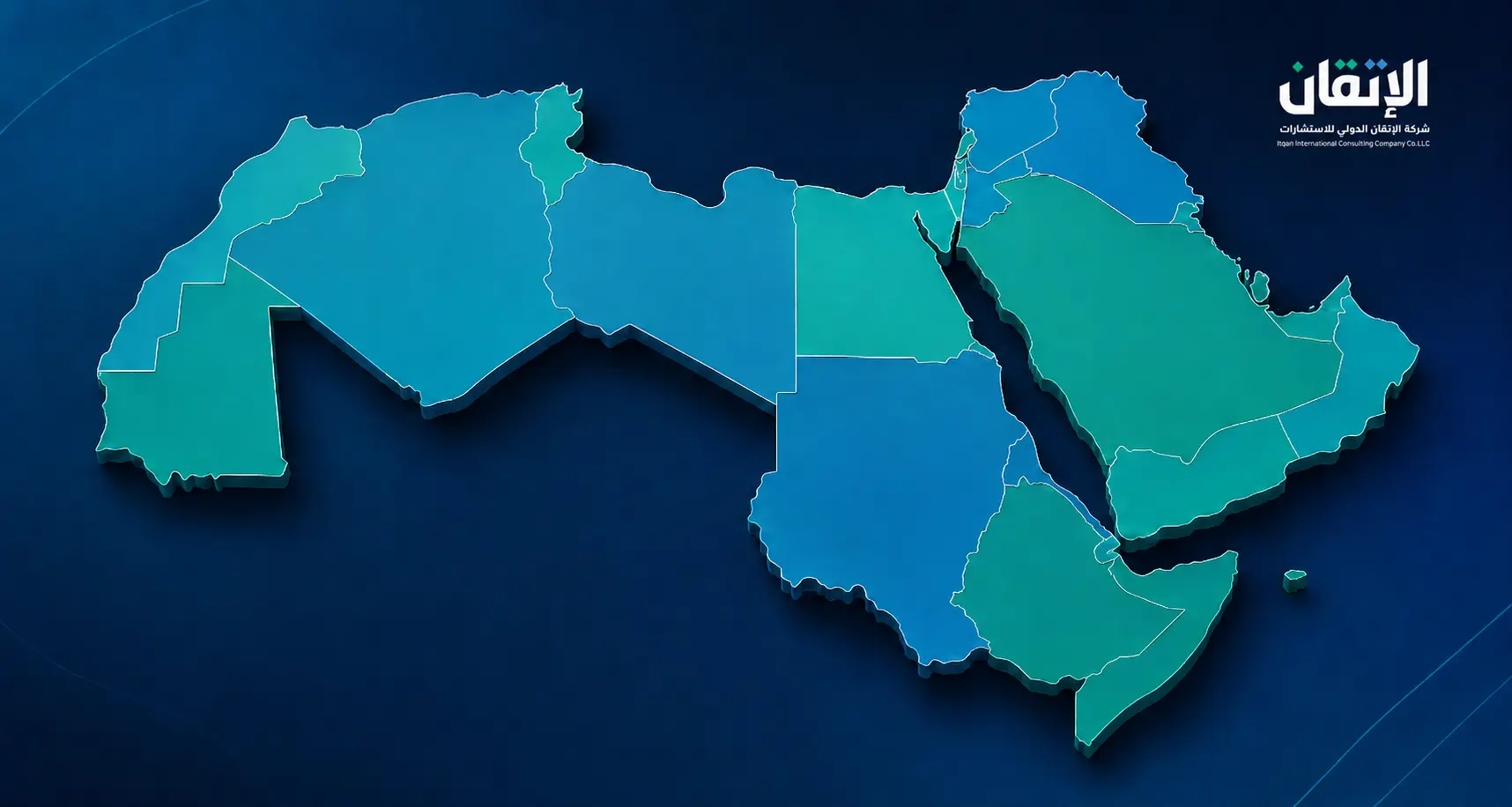
First: From Importing the Concept to Developing the Model
The journey of quality in the Arab world has not been a mere replication of Western models. Rather, it has been a gradual process of managerial awareness that moved from adoption, to empowerment, and ultimately to civilizational positioning.
In its early stages, quality within Arab institutions was often applied at a formal level through certificates, templates, surveys, and ISO standards.
However, as management thinking evolved, the focus began to shift from applying standards to building culture, and from external accreditation to sustainable self-improvement.
Over the past two decades—particularly with Saudi Vision 2030 and Gulf development programs—quality has become a strategic component of governance and institutional performance.
Second: The Saudi Experience — From Performance Control to the Creation of Excellence
The Kingdom of Saudi Arabia is now regarded as a leading Arab model in the implementation of quality systems and institutional excellence—not merely as administrative tools, but as part of a comprehensive national vision.
The Strategic Framework
Saudi Vision 2030 is built around three principal pillars:
A vibrant society
A thriving economy
An ambitious nation
Achieving these objectives required the adoption of quality and continuous improvement as a methodology for managing government performance and developing the private sector.
Accordingly, the Kingdom established the Expenditure and Projects Efficiency Authority, the National Center for Performance Measurement (Adaa), and a range of government excellence initiatives. These initiatives adopted models inspired by EFQM and Baldrige, while developing localized criteria aligned with the national context.
Quality of Government Services
Within the public sector, programs were launched to measure beneficiary satisfaction and assess the quality of digital services as part of the broader digital transformation agenda, which positioned Saudi Arabia among the leading countries in digital government indicators.
Methodologies such as risk management, quality automation, and institutional self-assessment were also adopted.
Education and Training
The Education and Training Evaluation Commission adopted a comprehensive framework for academic and institutional quality through the National Center for Academic Accreditation and Evaluation (NCAAA).
This contributed to moving Saudi universities toward greater academic maturity and continuous improvement.
The Healthcare Sector
The Ministry of Health introduced the Saudi Central Board for Accreditation of Healthcare Institutions (CBAHI) to ensure the quality of healthcare services.
Six Sigma and Lean Healthcare methodologies have also been implemented in numerous hospitals.
Results
This integrated system enabled Saudi Arabia to move from treating quality as an administrative requirement to adopting it as a national development policy connected to sustainability, efficiency, and innovation.
Third: The Emirati Experience — A Model of Sustainable Government Excellence
The United Arab Emirates is a pioneer in transforming quality into an integrated leadership and management system through the Sheikh Mohammed bin Rashid Government Excellence Program.
The Philosophy of the Emirati Model
The UAE did not rely solely on an imported model. Instead, it developed its own national framework for administrative excellence, known as the Global Star Rating System for Services, which links service quality to customer happiness.
In the Emirati experience, quality is therefore not merely operational efficiency, but a human-centered value associated with satisfaction and happiness.
Implementation Mechanisms
Applying the UAE Government Excellence Model, derived from EFQM
Establishing integrated service centers based on Customer Happiness Index standards
Adopting smart government and digital governance
Promoting government innovation as a central component of performance quality
Institutional Impact
Quality has become part of the UAE’s national identity and global reputation.
The country is now widely regarded as a model of administrative excellence and sustainable improvement through its integration of technology with leadership values.
Fourth: The Qatari Experience — Quality in Human Capital Development
Qatar has adopted quality as a tool for achieving the objectives of Qatar National Vision 2030, which emphasizes human and knowledge development.
This approach has been reflected in programs such as:
Qatar National School Accreditation (QNSA) for evaluating general education
The Quality Assurance Authority (QAA) for maintaining academic standards in higher education
Government performance excellence and institutional excellence awards
The Qatari experience is distinguished by its emphasis on quality in developing people, rather than limiting quality to the measurement of institutional performance.
This has made Qatar one of the first Arab countries to adopt the concept of knowledge-based human capital.
Fifth: The Bahraini Experience — Excellence Through Governance and Transparent Quality
The Kingdom of Bahrain adopted a distinctive management model that connects quality with institutional transparency.
Among its key initiatives are:
The King Hamad Award for Excellence in Government Performance
The Education and Training Quality Authority (BQA), which established a culture of institutional accreditation in education
The e-Government Strategy, which enhanced the efficiency of public services
Bahrain represents a leading model in embedding institutional governance within quality systems, where transparency and accountability are treated as essential elements of administrative excellence.
Sixth: The Omani Experience — Quality as an Organizational Value Linking Education and Development
The Sultanate of Oman adopted a gradual national quality model through the Oman Authority for Academic Accreditation and Quality Assurance of Education (OAAAQA), which oversees the evaluation of universities and training centers.
The government also launched Oman Vision 2040, which links quality with innovation and sustainability.
The strength of the Omani experience lies in its carefully structured and gradual approach, which builds institutional awareness step by step until quality maturity is achieved.
Seventh: The Kuwaiti Experience — Quality in Public Service and Administrative Development
In recent years, Kuwait has begun institutionalizing quality in the government sector through the Kuwait Government Excellence Award, while applying ISO standards in several ministries, particularly in education, healthcare, and public services.
The Kuwait Institute for Scientific Research (KISR) has also adopted a research quality framework based on the governance of scientific projects and their alignment with development objectives.
Eighth: Arab Experiences Beyond the Gulf
The Jordanian Experience
The King Abdullah II Award for Excellence in Government Performance and Transparency is one of the most significant Arab initiatives for building a culture of quality in public administration.
Jordanian ministries and institutions have effectively implemented the EFQM model, contributing to the development of institutional maturity and administrative governance.
The Egyptian Experience
Egypt has witnessed substantial progress in introducing quality into education, healthcare, and industry through the establishment of the National Authority for Quality Assurance and Accreditation of Education (NAQAAE), as well as institutional transformation programs within ministries under Egypt Vision 2030.
The Egyptian experience has focused on improving government processes and advancing administrative digitalization.
The Moroccan and Tunisian Experiences
Morocco and Tunisia have focused on industrial and environmental quality within the framework of agreements with the European Union, alongside the development of national quality assurance systems in higher education.
Local initiatives have also emerged, including the Moroccan Quality Award and the Tunisian Excellence Program.
Ninth: A Comparative Analysis of Gulf and Arab Experiences
Methodological Approach
The Gulf countries have generally adopted an integrated approach that links leadership with national vision, whereas other Arab countries have tended to focus more heavily on sector-specific improvement programs.
Tools
Gulf experiences have utilized excellence frameworks such as EFQM and Baldrige, with local adaptation.
By contrast, some other Arab experiences have remained more technically associated with ISO standards.
Results
Gulf countries have largely succeeded in transforming quality into a strategic national concept.
In many other Arab countries, however, quality has remained a partial tool for administrative development.
Tenth: Anticipating the Future of Quality in the Arab World
Current trends indicate that the next phase will witness a regional transition from quality management to quality leadership through three main dimensions:
Digitalization and intelligent analytics: Adopting real-time performance measurement systems.
Arab integration of standards: Establishing a unified Arab quality model.
Value-based quality: Integrating ethical dimensions into Arab governance systems.
Concluding Reflection — Toward an “Arab Model of Institutional Itqan”
Gulf and Arab experiences have demonstrated that quality is not merely an imported concept, but one that can take root in Arab culture and values.
The Arab world possesses civilizational and ethical foundations that enable it to formulate a distinctive model based on:
Itqan as a spiritual value
Innovation as a means
Sustainability as an ultimate objective
From this perspective, what may be called the:
Arab Model of Institutional Itqan
can emerge—a model that integrates Islamic thought, national vision, and modern management systems to produce a form of quality that arises from within, rather than from imitation.
(Note)
This article may be republished or used for educational, training, or research purposes, provided that appropriate attribution is given to its original source and that its scientific and analytical methodology is preserved.
Prepared by:
Dr. Najwa bint Abdulrahim Shaheen
Trainer, Assessor, Consultant, and Chairperson of the Board of Directors of
Al-Itqan International Training and Consulting Company
To access the complete series and further articles on quality:
Add New Comment